

London’s corporate event scene doesn’t just run on cocktails and PowerPoint slides. Behind the polished table settings and tailored suits, there’s a quiet, unspoken presence: professional companions. Not in the way you might think. These aren’t party guests or random hires. They’re vetted, discreet, and hired for one reason-to help smooth over social friction, fill conversational gaps, and make high-stakes networking feel natural.
What escorts actually do at corporate events
At a £500-a-plate charity gala in Mayfair or a private dinner for Fortune 500 executives, the goal isn’t just to close a deal-it’s to build trust. And trust doesn’t always come from handshakes. It comes from ease. From someone who knows how to listen, when to speak, and how to make a CEO feel like they’re the most interesting person in the room.
These professionals aren’t there to flirt or seduce. They’re there to balance the room. A male executive surrounded by other men? A well-placed female companion can shift the energy. A foreign client who doesn’t know British small talk? A companion fluent in both languages and cultural norms can bridge the gap. It’s not about romance. It’s about social architecture.
One event planner in West London told me they’ve stopped hiring waitstaff for certain dinners. Instead, they hire companions who know how to refill wine without being asked, how to redirect awkward questions, and how to make a shy CFO laugh without breaking character. One client paid £2,800 for a single evening-double the cost of a five-star caterer-because the companion helped seal a £3.2 million contract.
The unspoken rules of corporate escorting
There’s a code. You don’t talk about your clients. You don’t take photos. You don’t accept personal gifts. You don’t show up in the same outfit twice at the same venue. You don’t ask about salaries, politics, or private matters unless the client brings it up-and even then, you listen more than you respond.
Most agencies require background checks, references, and training in corporate etiquette. Some even run simulations: "You’re at a private jet launch in Surrey. The CEO’s wife is silent. The CFO is drunk. The investor from Tokyo is uncomfortable. What do you do?" The right answer isn’t to fix it. It’s to make everyone feel like they’re already fixed.
Many of these professionals have backgrounds in diplomacy, theater, or high-end hospitality. One woman I spoke with worked as a UN interpreter before switching to corporate companionship. "I learned how to read silence," she said. "That’s more valuable than any sales pitch."
Who hires them-and why
It’s not just the wealthy. Tech startups, law firms, private equity groups, and even government contractors hire companions for events. Why? Because the stakes are higher than ever. A single misstep in a conversation can cost a deal. A long silence can look like disinterest. A forced laugh can feel manipulative.
Startups use them to appear more established. A young founder bringing a companion to a venture capital mixer sends a signal: "I have the resources, the connections, the polish." It’s not about pretending to be rich. It’s about proving you belong in the room.
International clients are the biggest users. A German engineer doesn’t know how to respond to "How’s the weather?" in a way that doesn’t sound robotic. A Japanese executive might avoid eye contact out of respect, but in London, that reads as disengaged. A companion can gently adjust the tone without anyone realizing it’s being adjusted.

How it’s different from prostitution
Let’s be clear: this isn’t sex work. It’s social work. The boundaries are strict, legally enforced, and professionally maintained. Most agencies have zero-tolerance policies. Violate them, and you’re blacklisted-not just from one client, but from the entire network.
There’s a reason why these services are rarely advertised online. No one posts "Escort for Board Meeting" on Instagram. They’re referred through word-of-mouth, vetted introductions, and trusted event planners. The clients aren’t looking for thrills. They’re looking for control.
Legal gray areas exist, but the industry operates on reputation. A single scandal can collapse a business. That’s why most agencies require contracts, NDAs, and pre-event briefings that outline every possible scenario. They’re not selling access. They’re selling confidence.
The hidden cost of awkwardness
Think about how much money is lost in corporate events because people feel uncomfortable. A quiet investor walks away. A potential partner misreads a gesture. A deal stalls because no one knew how to break the ice.
There’s no official data on this-because no one wants to admit it-but industry insiders estimate that 30% of failed deals at high-end events stem from social missteps. That’s not about the product. It’s about the person sitting across the table.
Companions reduce that risk. They don’t guarantee a sale. But they make sure the conversation has a chance to happen.
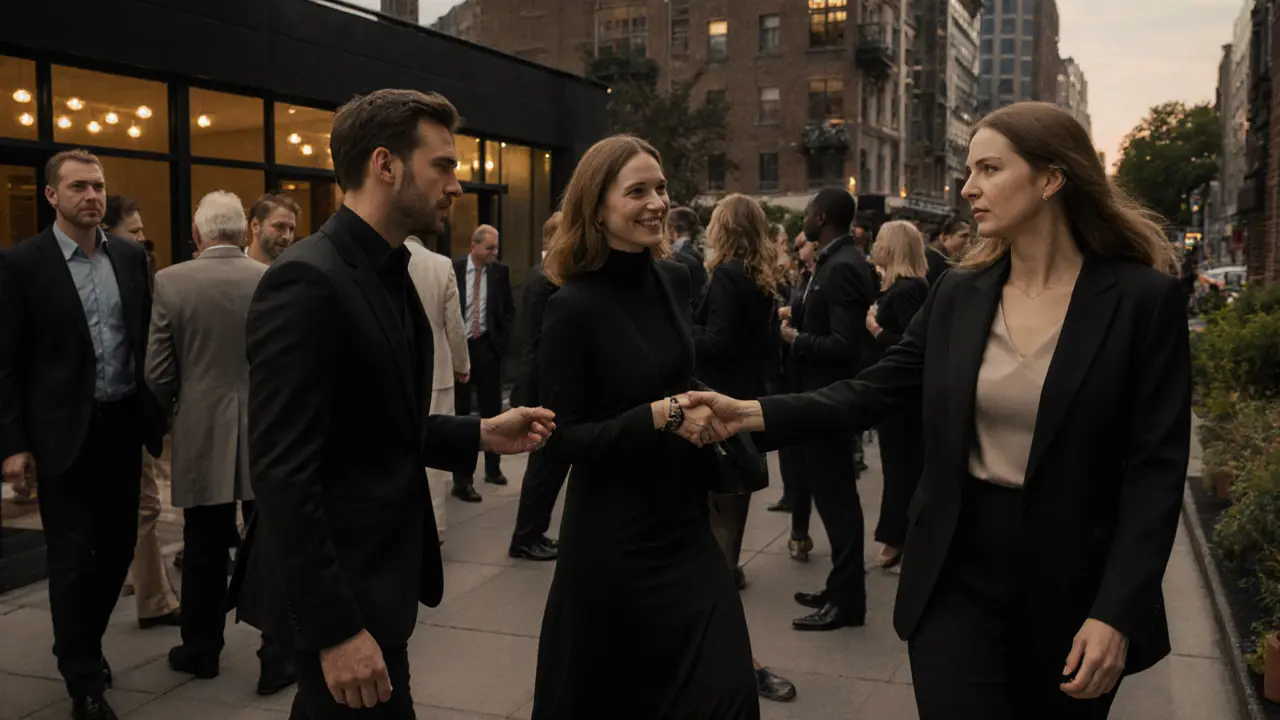
Who these professionals really are
They’re not stereotypes. One man I met was a former Royal Marines officer who now works as a companion for male executives. "I used to lead teams in hostile environments," he told me. "Now I lead conversations in boardrooms. Same skills. Different battlefield."
Another is a retired opera singer who speaks six languages. She’s booked for EU summits in London. "I don’t sing anymore," she said. "But I still know how to hold a room."
Most are women, but the demand for male companions is rising-especially in industries where women are underrepresented. A tech founder bringing a male companion to a male-dominated pitch night isn’t trying to impress anyone with romance. He’s trying to avoid being seen as the odd one out.
The future of corporate companionship in London
As remote work fades and hybrid events return, the need for in-person social lubrication is growing. London, with its mix of global finance, tech innovation, and cultural diversity, is at the center of this shift.
Agencies are now offering tiered services: "Essential" for basic presence, "Premium" for multilingual support, and "Elite" for former diplomats or ex-royal household staff. One agency even offers a "Crisis Companion"-someone trained to de-escalate emotional outbursts during tense negotiations.
It’s not about replacing human connection. It’s about enhancing it. In a world where every handshake is recorded, every smile is analyzed, and every pause is interpreted, having someone who knows how to make the silence feel intentional-that’s not a luxury. It’s a strategy.
Are corporate escorts in London legal?
Yes, as long as no sexual services are exchanged. London law prohibits solicitation and prostitution, but professional companionship-defined as social, conversational, or event support-is not illegal. Agencies operate under strict contracts that explicitly forbid physical intimacy. Violations can lead to criminal charges and permanent bans from the industry.
How much do corporate escorts charge in London?
Rates vary based on experience and event type. Basic companions start at £300-£500 per evening. Premium services with multilingual skills, corporate background, or elite training range from £800 to £1,500. Elite-level companions with diplomatic or high-society experience can charge £2,000-£3,500 for a single event. Most agencies require a deposit and a signed NDA before booking.
Can anyone become a corporate escort in London?
No. Reputable agencies have strict screening: background checks, references, interviews, and sometimes psychological assessments. Experience in hospitality, diplomacy, theater, or customer service is preferred. Many applicants are turned away for lacking emotional intelligence, discretion, or adaptability. It’s not about looks-it’s about presence.
Do companies openly admit to hiring corporate escorts?
Almost never. Companies treat this as a confidential operational detail, similar to hiring a private security team or a speech coach. Publicly acknowledging it could damage reputation or invite scrutiny. Most clients prefer to say their companion was a "guest" or "consultant." The industry thrives on discretion, not publicity.
Are corporate escorts only for men?
No. While historically female companions were more common, demand for male companions has grown significantly since 2020. Female executives, LGBTQ+ clients, and international delegations now regularly request male companions to balance gender dynamics or avoid assumptions. The market is shifting toward inclusivity, not gender stereotypes.